Can ceramic testing equipment detect crack propagation in ceramics?
Hey there! I'm a supplier of Ceramic Testing Eqipment, and today I want to dive into the question: Can ceramic testing equipment detect crack propagation in ceramics? It's a super important topic, especially for industries that rely heavily on ceramics, like the automotive and aerospace sectors.
First off, let's talk about why detecting crack propagation in ceramics is such a big deal. Ceramics are known for their high strength, hardness, and resistance to heat and corrosion. They're used in all sorts of applications, from spark plugs to turbine blades. But here's the thing: ceramics are also brittle. That means they can crack under stress, and once a crack starts, it can spread quickly and lead to catastrophic failure. So, being able to detect crack propagation early on is crucial for ensuring the safety and reliability of ceramic components.
Now, let's get to the main question: Can our ceramic testing equipment do the job? The short answer is yes! Our Ceramic Testing Eqipment is designed with state - of - the - art technology to detect even the smallest signs of crack propagation in ceramics.
One of the key methods our equipment uses is acoustic emission (AE) testing. When a crack propagates in a ceramic material, it releases energy in the form of elastic waves, which are called acoustic emissions. Our AE sensors are highly sensitive and can pick up these emissions. By analyzing the characteristics of the acoustic emissions, such as their amplitude, frequency, and arrival time, we can determine the location, size, and growth rate of the crack.
Another technique is ultrasonic testing. Ultrasonic waves are sent through the ceramic sample. When a crack is present, the waves are reflected or refracted, and our equipment can detect these changes. By scanning the ceramic with ultrasonic waves from different angles, we can create a detailed image of the internal structure of the ceramic and identify any cracks that may be present.


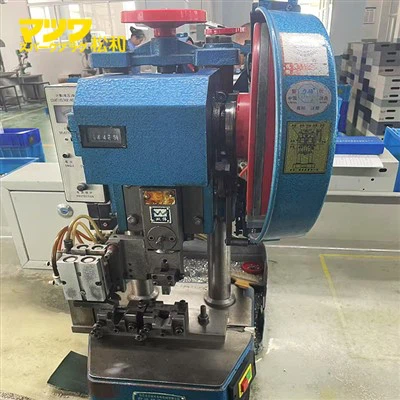
We also have Cut Side Bending Equipment that can be used in conjunction with our ceramic testing. This equipment applies a controlled bending force to the ceramic sample. As the force is applied, any existing cracks will start to propagate. Our ceramic testing equipment can then monitor the process in real - time, detecting the moment when the crack begins to grow and how fast it spreads.
Air leakage detection is another aspect. With our Air Leakage Detection Equiment, we can check if there are any cracks that allow air to pass through the ceramic. A crack in a ceramic component can create a pathway for air to leak, and our equipment can detect even the tiniest air leaks. If an air leak is detected, it's a strong indication that there is a crack in the ceramic, and further analysis can be done to determine the extent of the crack propagation.
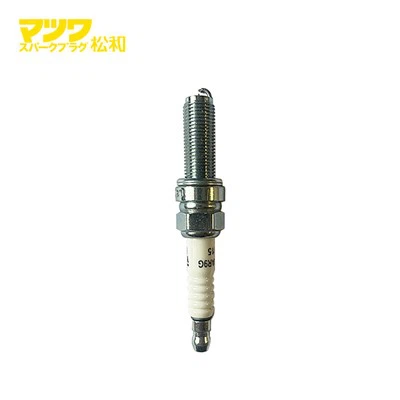
Let's take a look at some real - world examples. In the automotive industry, spark plugs are made of ceramics. A crack in a spark plug can lead to misfires, reduced engine performance, and even engine damage. Our ceramic testing equipment can be used during the manufacturing process to ensure that each spark plug is free of cracks. It can also be used in the field to test spark plugs that have been in use for a while, detecting any signs of crack propagation before they cause major problems.
In the aerospace industry, ceramic components are used in turbine engines. These components are subjected to extreme temperatures and high stresses. A crack in a turbine blade can be extremely dangerous, as it can lead to engine failure. Our equipment can be used to regularly inspect these components, detecting crack propagation at an early stage and allowing for timely maintenance or replacement.
But it's not just about detecting crack propagation. Our ceramic testing equipment also provides valuable data that can be used to improve the design and manufacturing process of ceramic components. By analyzing the data on crack propagation, engineers can identify weak points in the ceramic structure and make adjustments to the design or manufacturing process to prevent cracks from occurring in the first place.
So, if you're in an industry that uses ceramics and you're worried about crack propagation, our Ceramic Testing Eqipment is the solution you need. Whether you're a manufacturer looking to ensure the quality of your products or a maintenance team looking to detect potential problems in the field, our equipment can help.
If you're interested in learning more about our ceramic testing equipment or have any questions about crack propagation detection in ceramics, don't hesitate to reach out. We're here to help you find the best testing solution for your needs. Let's start a conversation about how our equipment can benefit your business.
References
- Nondestructive Testing Handbook, Volume 7: Ultrasonic Testing, American Society for Nondestructive Testing
- Acoustic Emission Testing: Principles and Applications, Edited by J. Prosser
- Ceramic Materials: Science and Engineering, By W. D. Kingery, H. K. Bowen, and D. R. Uhlmann