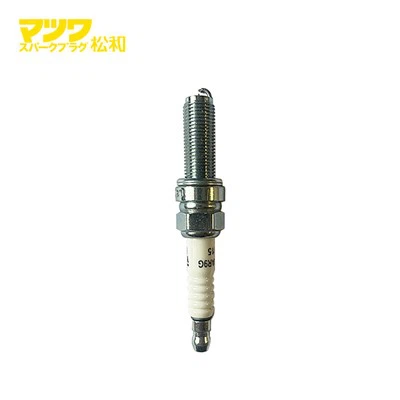
Engine spark plugs are small yet crucial components in an internal combustion engine. They play a pivotal role in initiating the combustion process, which is fundamental to the engine's operation. But beyond just getting the engine running, spark plugs have a significant impact on engine emissions. As a leading supplier of engine spark plugs, I have witnessed firsthand how the right spark plugs can make a substantial difference in reducing emissions and improving engine performance.
The Basics of Spark Plugs and Combustion
Before delving into how spark plugs affect engine emissions, it's essential to understand their basic function. In a gasoline engine, the spark plug creates an electrical spark at the precise moment when the piston is at the top of its compression stroke. This spark ignites the air - fuel mixture in the combustion chamber, causing it to burn rapidly and expand. This expansion forces the piston down, which in turn rotates the crankshaft and powers the vehicle.
The quality and efficiency of this ignition process are directly related to the performance of the spark plug. A well - functioning spark plug ensures that the air - fuel mixture burns completely. When the combustion is complete, the engine can extract the maximum amount of energy from the fuel, resulting in better fuel economy and lower emissions.
How Spark Plugs Influence Emissions
Incomplete Combustion
One of the primary ways spark plugs affect emissions is through incomplete combustion. If a spark plug is worn out, fouled, or not properly gapped, it may not produce a strong enough spark to ignite the entire air - fuel mixture. As a result, some of the fuel remains unburned and is expelled from the engine as hydrocarbons (HC). Hydrocarbons are a major component of smog and can have harmful effects on the environment and human health.
For example, old spark plugs with eroded electrodes may have a weaker spark. This weaker spark may not be able to penetrate the dense air - fuel mixture, leading to pockets of unburned fuel. These unburned hydrocarbons contribute to increased pollution levels and can cause the vehicle to fail emissions tests.
Carbon Monoxide (CO) Emissions
Carbon monoxide is a colorless, odorless, and toxic gas produced during the combustion process. When the combustion is incomplete, more carbon monoxide is produced. A faulty spark plug can disrupt the normal combustion process, leading to an increase in CO emissions.
In a properly functioning engine, the spark plug should create a spark that initiates a rapid and complete combustion of the air - fuel mixture. This combustion converts carbon in the fuel into carbon dioxide (CO₂), which is a less harmful greenhouse gas compared to CO. However, if the spark plug fails to provide a consistent and powerful spark, the combustion will be inefficient, and more CO will be produced.
Nitrogen Oxides (NOₓ) Emissions
Nitrogen oxides are formed when nitrogen and oxygen in the air react at high temperatures in the combustion chamber. The combustion temperature is influenced by the quality of the spark plug. A good spark plug can ensure a more controlled and efficient combustion process, which helps to keep the combustion temperature within an optimal range.
If the spark plug is not working correctly, the combustion may be uneven, leading to hot spots in the combustion chamber. These hot spots can cause an increase in the formation of nitrogen oxides. High levels of NOₓ contribute to the formation of acid rain, smog, and can also have negative impacts on human respiratory systems.
Types of Spark Plugs and Their Impact on Emissions
Copper Spark Plugs
Copper spark plugs are the most basic type of spark plugs. They have a copper core electrode, which provides good thermal conductivity. However, copper electrodes tend to erode relatively quickly, especially in high - performance engines. As the electrodes erode, the spark becomes weaker, leading to incomplete combustion and increased emissions.
Platinum Spark Plugs
Platinum spark plugs have a platinum tip on the center electrode. Platinum is a harder and more durable material than copper. This means that platinum spark plugs can maintain a consistent spark for a longer period. They are less likely to experience electrode wear, which helps to ensure more complete combustion and lower emissions over time.
Iridium Spark Plugs
Iridium spark plugs are the most advanced type of spark plugs available. Iridium is an extremely hard and corrosion - resistant metal. Iridium spark plugs have a very fine center electrode, which allows for a more precise and powerful spark. This results in more efficient combustion, better fuel economy, and lower emissions. They are often used in modern, high - performance engines where precise ignition is crucial.
The Role of Our Spark Plugs in Reducing Emissions
As a supplier of engine spark plugs, we offer a wide range of high - quality spark plugs, including Automotive Spark Plugs. Our spark plugs are designed to provide a strong and consistent spark, ensuring complete combustion of the air - fuel mixture.
We also have specialized spark plugs for different vehicle makes and models, such as Spark Plug For Mercedes - Benz and Spark Plug For Hyundai. These spark plugs are engineered to meet the specific requirements of each vehicle, optimizing the combustion process and reducing emissions.
Our research and development team continuously works on improving the design and performance of our spark plugs. We use the latest materials and manufacturing techniques to ensure that our spark plugs have a long service life and can maintain their performance under various operating conditions.
The Importance of Regular Spark Plug Replacement
Regular spark plug replacement is crucial for maintaining low emissions and optimal engine performance. Over time, spark plugs will naturally wear out due to the high - temperature and high - pressure environment in the combustion chamber. As they wear, their ability to produce a strong spark diminishes, leading to increased emissions.


Most vehicle manufacturers recommend replacing spark plugs every 30,000 to 100,000 miles, depending on the type of spark plugs and the vehicle's usage. By replacing spark plugs at the recommended intervals, vehicle owners can ensure that their engines are running efficiently and that emissions are kept to a minimum.
Conclusion
Engine spark plugs have a profound impact on engine emissions. A well - functioning spark plug is essential for complete combustion, which reduces the production of harmful pollutants such as hydrocarbons, carbon monoxide, and nitrogen oxides. As a supplier of engine spark plugs, we are committed to providing high - quality products that help our customers reduce their environmental impact while improving engine performance.
If you are interested in learning more about our engine spark plugs or would like to discuss your specific requirements, we encourage you to reach out to us for a procurement discussion. Our team of experts is ready to assist you in finding the right spark plugs for your vehicles.
References
- Heywood, J. B. (1988). Internal Combustion Engine Fundamentals. McGraw - Hill.
- Taylor, C. F. (1985). The Internal Combustion Engine in Theory and Practice. MIT Press.
- Society of Automotive Engineers (SAE) Technical Papers.