Hey there, fellow boating enthusiasts! I'm a supplier of Gasoline Marine Spark Plugs, and today I'm gonna take you on a deep dive into how the ignition system works hand in hand with these crucial components.
First off, let's understand the basics of a marine engine's ignition system. It's like the heart of your boat's powerplant, responsible for starting the engine and keeping it running smoothly. The ignition system's main job is to create a spark at just the right time to ignite the air - fuel mixture in the engine's cylinders.
Now, when it comes to gasoline marine engines, gasoline marine spark plugs play a super important role. These spark plugs are specifically designed to work in the harsh marine environment. They need to withstand high temperatures, moisture, and vibrations that are common on boats.
Let's break down the process step by step. The ignition system starts with the battery. The battery provides the initial electrical energy. When you turn the key in the ignition switch, it sends an electrical signal to the ignition coil. The ignition coil is like a transformer. It takes the low - voltage electricity from the battery (usually 12 volts) and steps it up to a really high voltage, sometimes as much as 30,000 volts or more.
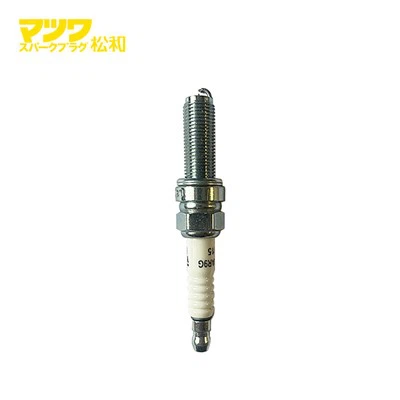
This high - voltage electricity then travels through the spark plug wires to the gasoline marine spark plugs. The spark plug has a center electrode and a ground electrode. When the high - voltage electricity reaches the spark plug, it jumps across the gap between these two electrodes. This jump creates a spark, just like a mini lightning bolt.
The spark is what ignites the air - fuel mixture in the engine's cylinder. The air - fuel mixture is a combination of gasoline vapor and air that has been drawn into the cylinder through the intake valve. Once the spark ignites this mixture, it explodes. This explosion forces the piston down in the cylinder, which in turn rotates the crankshaft. The rotation of the crankshaft is what ultimately powers the boat's propeller and gets you moving on the water.
But it's not just about creating a spark. The timing of the spark is crucial. If the spark occurs too early or too late, the engine won't run efficiently. Modern ignition systems use sensors to determine the optimal timing. These sensors monitor things like engine speed, load, and the position of the pistons. Based on this information, the ignition control module adjusts the timing of the spark to ensure maximum power and efficiency.
Now, let's talk about the differences between gasoline marine spark plugs and Diesel Marine Spark Plugs. Diesel engines work on a different principle. They don't rely on spark plugs to ignite the fuel. Instead, they compress the air in the cylinder to such a high pressure that it heats up enough to ignite the diesel fuel when it's injected into the cylinder. So, diesel marine spark plugs have a different design and function compared to their gasoline counterparts.
As a supplier of gasoline marine spark plugs, I know how important it is to choose the right spark plugs for your boat. There are several factors to consider. One of the most important is the heat range. The heat range of a spark plug refers to its ability to dissipate heat. If the heat range is too hot, the spark plug can overheat, which can lead to pre - ignition and engine damage. If it's too cold, the spark plug can become fouled with carbon deposits, which will reduce its performance.


Another factor is the electrode material. Spark plugs can have electrodes made of different materials, such as copper, platinum, or iridium. Copper electrodes are the most common and are relatively inexpensive. They conduct heat well but wear out faster. Platinum and iridium electrodes are more durable and can last longer, but they're also more expensive.
It's also important to replace your gasoline marine spark plugs regularly. Over time, the electrodes wear down, and the gap between them can change. This can affect the performance of the ignition system and the engine as a whole. A general rule of thumb is to replace your spark plugs every 100 - 200 hours of engine operation or at least once a year, depending on how often you use your boat.
If you're having problems with your boat's engine, such as rough idling, misfiring, or poor acceleration, it could be a sign that your gasoline marine spark plugs need to be replaced. You might also notice a decrease in fuel efficiency. In these cases, it's a good idea to check the spark plugs. You can remove them and inspect them for signs of wear, fouling, or damage.
As a supplier, I've seen firsthand how the right spark plugs can make a huge difference in a boat's performance. We offer a wide range of gasoline marine spark plugs to suit different types of engines and boating needs. Whether you have a small outboard motor or a large inboard engine, we've got you covered.
If you're in the market for new gasoline marine spark plugs or just have questions about how they work, don't hesitate to reach out. We're here to help you make the right choice for your boat. A well - maintained ignition system with the right spark plugs can keep your boat running smoothly and reliably for years to come. So, if you're looking to improve your boat's performance or just need to replace some worn - out spark plugs, let's start a conversation. We can discuss your specific requirements and find the perfect solution for you.
References:
- "Marine Engine Manual" - A comprehensive guide to marine engines and their components.
- "Spark Plug Technology Handbook" - Covers the science and design of spark plugs.