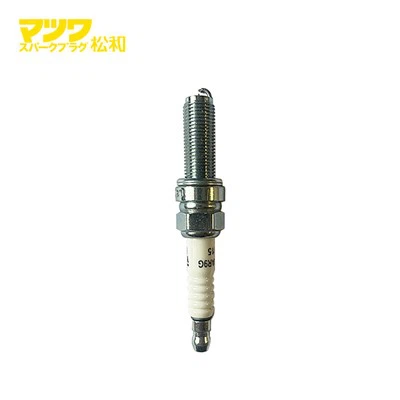
Installing motorcycle spark plugs is a fundamental maintenance task that can significantly impact your bike's performance. As a trusted motorcycle spark plugs supplier, I'm here to guide you through the process, ensuring your motorcycle runs smoothly and efficiently.
Why Spark Plugs Matter
Before we dive into the installation process, let's understand why spark plugs are so crucial for your motorcycle. Spark plugs are responsible for igniting the air-fuel mixture in the combustion chamber. A well-functioning spark plug ensures a strong, consistent spark, which leads to efficient combustion, better fuel economy, and optimal engine performance. Over time, spark plugs can wear out, leading to misfires, reduced power, and increased fuel consumption. Regularly replacing your spark plugs can prevent these issues and keep your motorcycle in top condition.
Tools You'll Need
To install motorcycle spark plugs, you'll need a few basic tools:
- Spark plug socket: This is a specialized socket designed to fit spark plugs. Make sure it has a rubber insert to hold the spark plug securely.
- Ratchet or socket wrench: You'll use this to turn the spark plug socket.
- Gap gauge: This tool is used to measure and adjust the gap between the spark plug's electrodes.
- Anti-seize compound: Applying a small amount of anti-seize compound to the spark plug threads can prevent them from seizing in the cylinder head.
- Compressed air or a clean cloth: You'll use this to clean the area around the spark plug before removing it.
Step-by-Step Installation Guide
Step 1: Prepare Your Motorcycle
Before you start working on your motorcycle, make sure the engine is cool. Working on a hot engine can cause burns and damage to the components. Park your motorcycle on a level surface and engage the parking brake. If your motorcycle has a fairing or other bodywork that needs to be removed to access the spark plugs, follow the manufacturer's instructions to remove it carefully.
Step 2: Locate the Spark Plugs
The location of the spark plugs can vary depending on the make and model of your motorcycle. In most cases, you'll find them on the side of the engine, near the top. Refer to your motorcycle's owner's manual for the exact location. Once you've located the spark plugs, use compressed air or a clean cloth to remove any dirt, debris, or oil from the area around them. This will prevent any foreign particles from falling into the combustion chamber when you remove the spark plugs.
Step 3: Remove the Old Spark Plugs
Start by removing the spark plug wire or ignition coil from the old spark plug. You can do this by gently pulling on the boot or connector. Be careful not to pull on the wire itself, as this can damage it. Next, attach the spark plug socket to the ratchet or socket wrench. Place the socket over the old spark plug and turn it counterclockwise to loosen it. Once the spark plug is loose, you can remove it by hand.
Step 4: Check and Adjust the Spark Plug Gap
Before installing the new spark plugs, you need to check and adjust the gap between the electrodes. The correct gap size can vary depending on the make and model of your motorcycle, so refer to your owner's manual or the spark plug manufacturer's specifications for the recommended gap size. To check the gap, use a gap gauge. Insert the gauge between the electrodes and see if it fits snugly. If the gap is too wide or too narrow, you can adjust it by carefully bending the ground electrode with a pair of pliers. Be careful not to apply too much pressure, as this can damage the spark plug.
Step 5: Apply Anti-Seize Compound
Applying a small amount of anti-seize compound to the spark plug threads can prevent them from seizing in the cylinder head. Use a clean cloth or a small brush to apply a thin layer of anti-seize compound to the threads. Be careful not to get any anti-seize compound on the electrodes, as this can affect the spark plug's performance.
Step 6: Install the New Spark Plugs
Carefully insert the new spark plug into the spark plug socket. Make sure the spark plug is properly aligned with the cylinder head. Then, place the socket over the spark plug and turn it clockwise by hand until it is finger-tight. Once the spark plug is finger-tight, use the ratchet or socket wrench to turn it an additional 1/4 to 1/2 turn. Be careful not to over-tighten the spark plug, as this can damage the threads in the cylinder head.
Step 7: Reconnect the Spark Plug Wires or Ignition Coils
Once the new spark plugs are installed, reconnect the spark plug wires or ignition coils. Make sure they are securely attached to the spark plugs. You can do this by gently pushing the boot or connector onto the spark plug until you hear a click.
Step 8: Reassemble Your Motorcycle
If you removed any bodywork to access the spark plugs, follow the manufacturer's instructions to reassemble it. Make sure all the bolts and screws are tightened properly.
Step 9: Start Your Motorcycle
Once you've reassembled your motorcycle, start the engine and let it run for a few minutes. Listen for any unusual noises or vibrations. If everything sounds and runs smoothly, you've successfully installed the new spark plugs.
Recommended Spark Plugs
As a motorcycle spark plugs supplier, we offer a wide range of high-quality spark plugs for various makes and models of motorcycles. Here are some of our popular products:


- Motorcraft Spark Plug: These spark plugs are known for their durability and performance. They are designed to provide a strong, consistent spark, which leads to efficient combustion and better fuel economy.
- Yamaha Pw50 Spark Plug: If you own a Yamaha Pw50, these spark plugs are specifically designed for your motorcycle. They are engineered to meet the exact specifications of the Yamaha Pw50 engine, ensuring optimal performance.
- 2017 Kx100 Spark Plug: For riders of the 2017 Kx100, these spark plugs are the perfect choice. They are designed to deliver maximum power and performance, even under the most demanding riding conditions.
Contact Us for Your Spark Plug Needs
If you're looking for high-quality motorcycle spark plugs or need more information about the installation process, don't hesitate to contact us. Our team of experts is here to help you find the right spark plugs for your motorcycle and answer any questions you may have. Whether you're a professional mechanic or a DIY enthusiast, we're committed to providing you with the best products and service.
References
- Motorcycle owner's manual
- Spark plug manufacturer's specifications