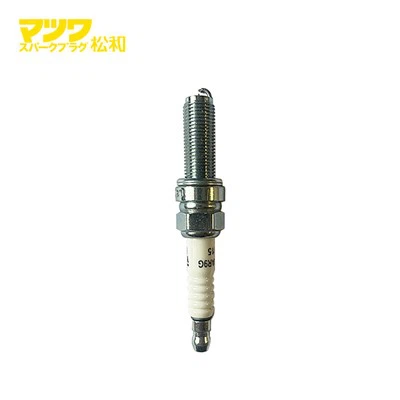
Hey there! As a supplier of Iridium Spark Plugs, I often get asked about the heat range of these little power - boosters. So, let's dive right in and break it down.
First off, what exactly is the heat range of a spark plug? Well, it's not about how hot the spark is. Instead, it refers to the ability of the spark plug to transfer heat from the firing end (the part that creates the spark) to the engine's cooling system. In simpler terms, it's a measure of how well the plug can keep itself at the right temperature.
Iridium spark plugs are known for their durability and high - performance capabilities. They're made with a fine wire center electrode made of iridium, which is super strong and can withstand high temperatures. But even these tough plugs need to be in the right heat range to work their best.
There are two main types of heat ranges: hot and cold. A hot spark plug has a longer insulator nose. This means that there's more distance for the heat to travel from the firing end to the engine's cooling system. As a result, the firing end of a hot plug stays hotter. Hot plugs are great for engines that run at low speeds or under light loads. They help prevent fouling, which is when carbon and other deposits build up on the plug. When the plug is hot, these deposits are burned off more easily.
On the other hand, a cold spark plug has a shorter insulator nose. This allows heat to transfer more quickly to the engine's cooling system, keeping the firing end cooler. Cold plugs are ideal for high - performance engines that run at high speeds or under heavy loads. In these engines, there's a lot of heat generated, and if the plug gets too hot, it can cause pre - ignition. Pre - ignition is when the fuel in the cylinder ignites before the spark plug fires, which can lead to engine damage.
Now, how do you know which heat range is right for your engine? Well, it depends on a few factors. The type of engine, its compression ratio, the ignition timing, and the type of fuel used all play a role. Most vehicle manufacturers specify the correct heat range of spark plugs for their engines in the owner's manual. But if you're modifying your engine for more power, you might need to adjust the heat range accordingly.
For example, if you've added a turbocharger or supercharger to your engine, you're increasing the amount of air and fuel going into the cylinders. This creates more heat, so you'll probably need a colder spark plug. On the flip side, if you've made your engine run leaner (less fuel relative to air), you might need a hotter plug to prevent fouling.
As a supplier, I've seen a lot of different applications. For Ford vehicles, we have some great options. Check out our NGK ITEM FOR Ford. These are specifically designed to meet the requirements of Ford engines and come in the right heat range for optimal performance.
Similarly, for Honda vehicles, our NGK ITEM FOR Honda are top - notch. Honda engines have their own unique characteristics, and these spark plugs are tuned to work perfectly with them.
It's also worth comparing Iridium Spark Plugs with Platinum Spark Plugs. Platinum plugs are also popular and offer good performance. However, iridium is even harder and more resistant to wear. This means that iridium spark plugs generally last longer and can provide a more consistent spark over time.
When it comes to installation, it's important to follow the correct procedures. Make sure the spark plug is tightened to the right torque specification. If it's too loose, it can cause misfires and damage to the engine. If it's too tight, you might crack the insulator.
In addition to the heat range, there are other factors to consider when choosing iridium spark plugs. The electrode design can affect the spark pattern and combustion efficiency. A fine - wire electrode, like the ones on iridium plugs, can create a more focused and powerful spark. The gap between the center and ground electrodes also needs to be set correctly. This gap determines the strength of the spark and can impact engine performance.
Another thing to keep in mind is maintenance. Even though iridium spark plugs are durable, they still need to be checked periodically. Over time, the electrodes can wear down, and the gap can change. If you notice any signs of poor engine performance, like rough idling, decreased fuel efficiency, or difficulty starting the engine, it might be time to check your spark plugs.


So, if you're in the market for high - quality iridium spark plugs, you've come to the right place. Whether you're a car enthusiast looking to upgrade your engine's performance or a mechanic in need of reliable parts for your customers, we've got you covered. We offer a wide range of iridium spark plugs in different heat ranges to suit various engine types and applications.
If you have any questions about which heat range is right for your engine or need help choosing the best spark plugs for your vehicle, don't hesitate to reach out. We're here to assist you in making the right decision. Contact us to start a procurement discussion, and let's get your engine running at its best!
References:
- Automotive Spark Plug Handbook by Champion Spark Plug Company
- Engine Tuning and Performance Manual by Haynes Publishing